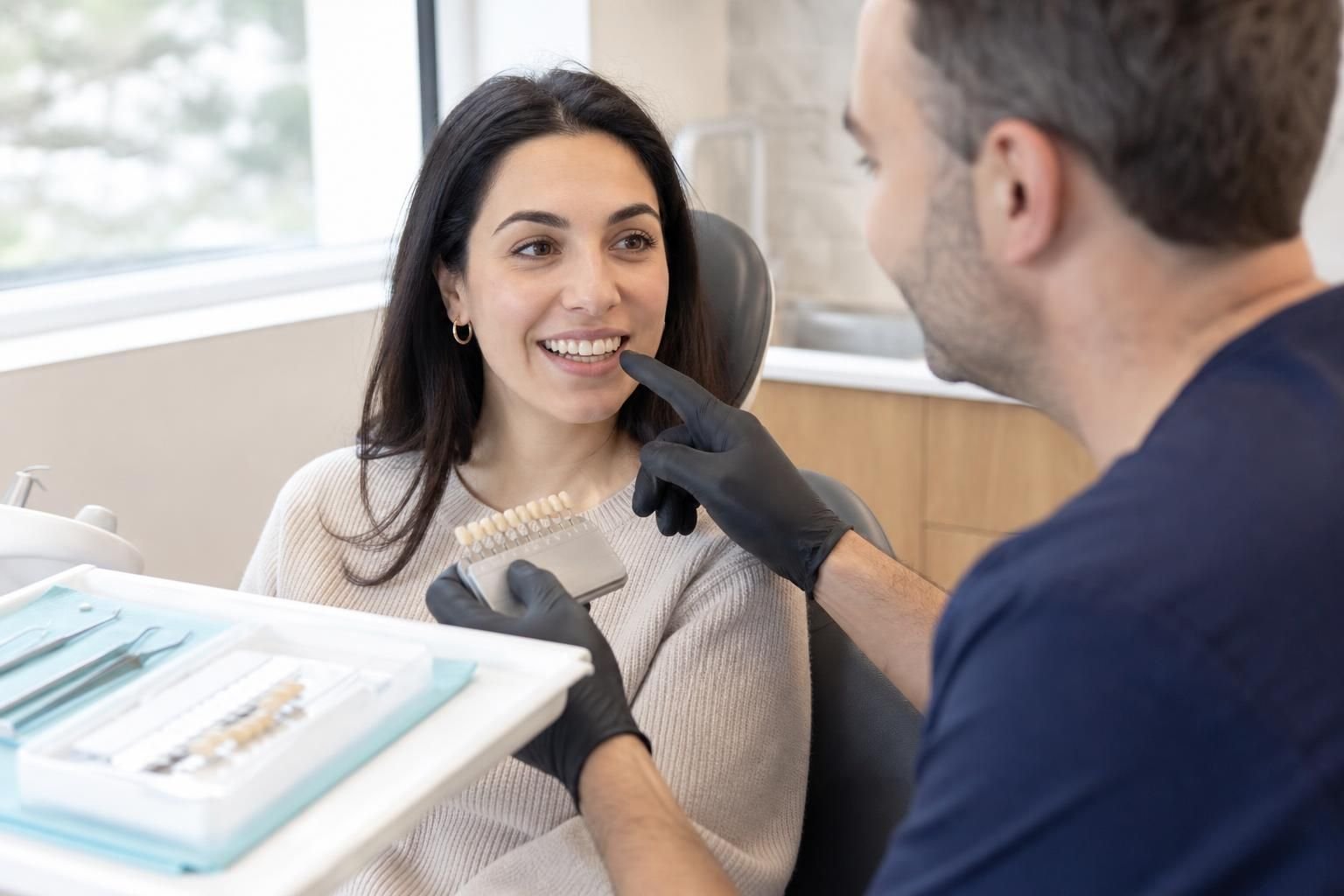
Dental bonding can make mildly crooked teeth look straighter, but it doesn’t actually move them. It uses tooth-colored composite resin to reshape edges, fill small gaps, and balance uneven front teeth.
For example, a slightly rotated front tooth may look less twisted after your dentist adds resin to one side and polishes the shape. Small gaps or chipped edges can also look more even.
Here’s the thing: bonding is cosmetic camouflage. If teeth are crowded, sticking out, or causing bite problems, Invisalign or braces may be the better first step.
Can Dental Bonding Fix Crooked Teeth?
Yes, dental bonding can make mildly crooked teeth look straighter, but it can’t correct tooth alignment. Your dentist uses composite resin to change the visible shape of natural teeth, so the eye reads the smile as more even.
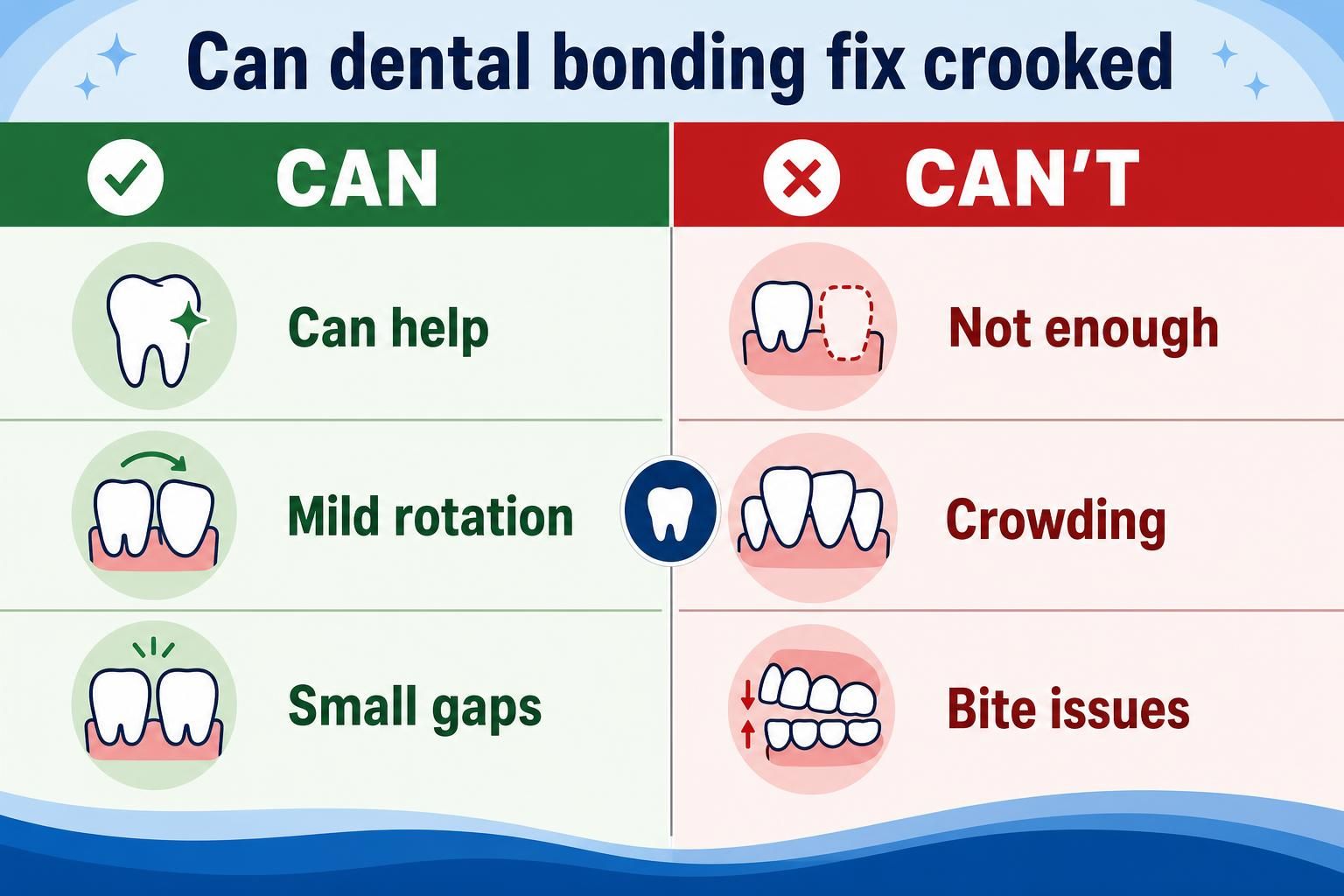
It works best for minor misalignment, small rotations, small gaps, uneven tooth edges, narrow teeth, or slightly misshapen teeth. It’s not enough for significant crowding, protruding teeth, overlapping teeth that affect cleaning, or an incorrect bite. In those cases, orthodontic treatment, such as Invisalign or braces, should come first.
How Bonding Makes Teeth Look Straighter
Bonding works like cosmetic camouflage. Your dentist adds tooth-colored composite resin to selected areas, then shapes and polishes it so uneven teeth look more balanced.
For example, a front tooth with a small rotation may catch the light at an odd angle. Adding resin to one edge can make the tooth look wider or more centered, even though its root hasn’t moved. The same idea helps small gaps, uneven tooth edges, narrow teeth, and mildly misshapen teeth.
Good smile design matters here. Too much resin can look bulky, affect the bite, or make cleaning harder.
Who is a Good Candidate for Bonding?
Mild Rotation or Overlap
You’re usually a better candidate when the crooked look comes from minor misalignment, not true tooth alignment problems. Think small rotations, slightly overlapping teeth, or one front tooth that sits a little behind its neighbor.
Bonding works best when your bite still feels comfortable and there’s enough room to add composite resin without making the tooth bulky. If teeth are tightly crowded, protruding, or hitting badly when you chew, orthodontic treatment is usually the smarter first step.
A good dentist will also check gum health, tooth enamel, and oral hygiene. Active tooth problems or gum problems should be treated before cosmetic bonding.
Small Gaps, Uneven Edges, or Narrow Teeth
Bonding is often a great fit for small gaps, uneven tooth edges, narrow teeth, and mildly misshapen teeth. These issues don’t always need Invisalign or braces, especially when the goal is a smoother-looking smile.
For example, two front teeth with tiny spaces and chipped edges can often be balanced with careful shaping and shade-matched composite resin. The natural teeth stay in place, but the outline looks cleaner.
You’ll get the best results when the change needed is small, your bite is stable, and you’re okay with future polishing, repair, or maintenance.
When Bonding is Not Enough
Severe Crowding or Bite Issues
Bonding isn’t enough when teeth are packed tightly, pushed forward, or fighting for space. In those cases, adding composite resin can make the smile look bulkier.
Significant crowding, protruding teeth, and an incorrect bite usually need more than cosmetic reshaping. The issue isn’t just the tooth edge. It’s the tooth position, the bite, and how the teeth meet.
Overlapping teeth can be tricky too. A tiny overlap near the edge may be softened with shaping and bonding. But deeper overlap often needs orthodontic treatment first.
Call a dentist sooner if crowding comes with pain, sensitivity, bleeding gums, loose teeth, or trouble cleaning. Active tooth problems or gum problems should be treated before any cosmetic work.
Teeth That Need Orthodontics Instead
Choose orthodontics when the goal is to move teeth, not just hide small flaws. Invisalign or braces can create space, improve tooth alignment, and guide the bite into a healthier position.
A common plan is orthodontic treatment first, then bonding later. For example, Invisalign may straighten crowded front teeth. After that, bonding can fix uneven tooth edges or small gaps.
That combo often gives cleaner results than trying to cover everything with resin.
Dental Bonding vs Invisalign vs Veneers
Bonding, Invisalign, and veneers solve different problems, so the right choice depends on your goal: camouflage, movement, or fuller coverage.
| Crooked-tooth option | Use when | Changes | Main trade-off |
|---|---|---|---|
| Composite bonding | Small rotations, uneven edges, small gaps | Tooth shape and symmetry | Can stain, chip, or wear |
| Invisalign | Crowding, overlap, bite concerns | Actual tooth alignment | Takes longer and needs trays |
| Veneers or ceramic options | Color, shape, size, mild position flaws | Front tooth surface | More tooth preparation |
Here’s the thing: bonding is usually the quickest visual fix, but it’s the least powerful. Invisalign is better when teeth need space or the bite is off. Veneers can look very polished, but they’re a bigger commitment than composite resin.
What to Expect During the Procedure
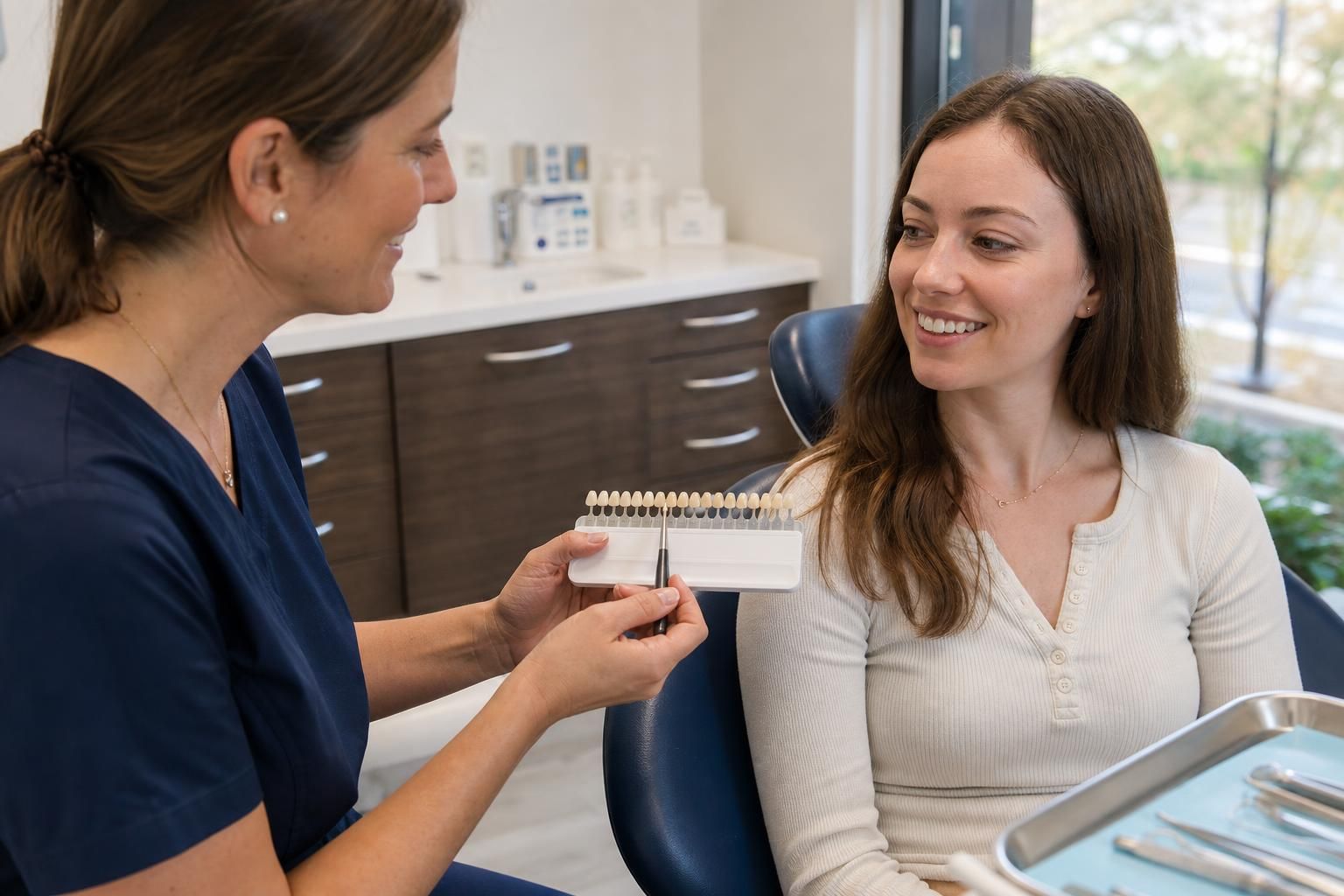
Your dentist will first check your bite, gum health, and any active tooth problems. Then you’ll review a smile design, often using photos or a mock-up, so you can see the planned shape.
During the bonding procedure, the tooth is cleaned and shade matching is done. The dentist lightly etches the tooth enamel, applies a bonding agent, then adds composite resin in thin layers. Each layer is hardened with a curing light.
After composite layering, the dentist shapes and polishes the resin. It’s usually not painful, though mild sensitivity can happen afterward.
How Long Bonding Lasts and How to Care for it
Composite bonding often lasts about 3 to 10 years, but that’s a typical planning range. Your bite, oral hygiene, diet, and grinding habits can change the lifespan a lot.
Bonded areas on uneven tooth edges or small rotations may wear faster if they hit hard during chewing. That’s why bite checks matter.
- Brush with a soft toothbrush and non-abrasive toothpaste.
- Floss daily around the natural teeth.
- Limit coffee, tea, red wine, and smoking to reduce staining.
- Don’t bite nails, pens, or ice.
- Book maintenance visits for polishing and small repairs before chipping grows.
Cost, Pros, and Limitations
Cost depends on the number of teeth, how much shaping is needed, and your dentist’s location. Most dentists price bonding per tooth, so a consultation is the only way to get a real estimate. These costs are general planning ranges, not quotes; actual prices vary by market, provider, scope, tooth condition, materials, labor, and availability, so confirm a current estimate before treatment. Ask whether polishing, repairs, or future maintenance are included.
The main pros are speed, lower tooth preparation, and a natural look when shade matching is done well. Bonding also usually preserves more tooth enamel than veneers, which is good news if your natural teeth are healthy.
The limits are just as important. Composite resin can stain, chip, and wear over time. It won’t fix tooth alignment, significant crowding, protruding teeth, or an incorrect bite. If your before and after goal needs major movement, Invisalign, orthodontic treatment, veneers, or ceramic options may fit better.
Questions to Ask Your Dentist Before Treatment
Bring photos of smiles you like, but ask for a bite-based plan, not just a prettier mockup.
- Is my issue minor misalignment, or do I have significant crowding or an incorrect bite?
- Will bonding hide this small rotation, overlap, gap, or uneven edge well?
- Would Invisalign, veneers, ceramic options, or orthodontic treatment give a better long-term result?
- How much tooth enamel needs preparation?
- What risks should I expect, like staining, chipping, wear, pain, or sensitivity?
- How many teeth need bonding for balance?
- What’s the estimated cost and lifespan?
- Can you break the quote into teeth treated, shaping, and any follow-up polishing or repair?
- Can I see before and after cases like mine?
Dental bonding for crooked teeth works best for small cosmetic issues like slight rotations, tiny gaps, uneven edges, or narrow teeth that need better balance. If teeth are crowded, pushed forward, or your bite is off, orthodontics usually needs to come first.
Bonding can make teeth look straighter, but it will not move them. Ask your dentist for a bite check, a smile mockup, and honest options before you commit. Ask about lifespan, upkeep, and the plan that fits your teeth, not just the mirror.