

Dental bonding before and after results can look subtle, clean, and very natural. The biggest changes usually happen on front teeth with chips, small gaps, stains, or uneven edges. Bonding doesn't rebuild your whole smile like full orthodontic or restorative work can. Instead, it makes small cosmetic fixes with tooth-colored resin. That's why it's popular for quick smile touch-ups. In this guide, we'll walk through what bonding is, what results can look like, who it's best for, and how it compares with veneers and crowns.
Best for: People with small chips, minor gaps, light stains, or uneven front teeth who want conservative cosmetic repair. Not ideal when: Teeth have major damage, heavy grinding wear, active decay, or bite problems that need stronger treatment. Good first step if: You want a dentist to check your enamel, bite, shade, and realistic before-and-after goals. Call a pro if: A tooth is broken, painful, loose, or sharp enough to cut your tongue or cheek.
What is Dental Bonding?
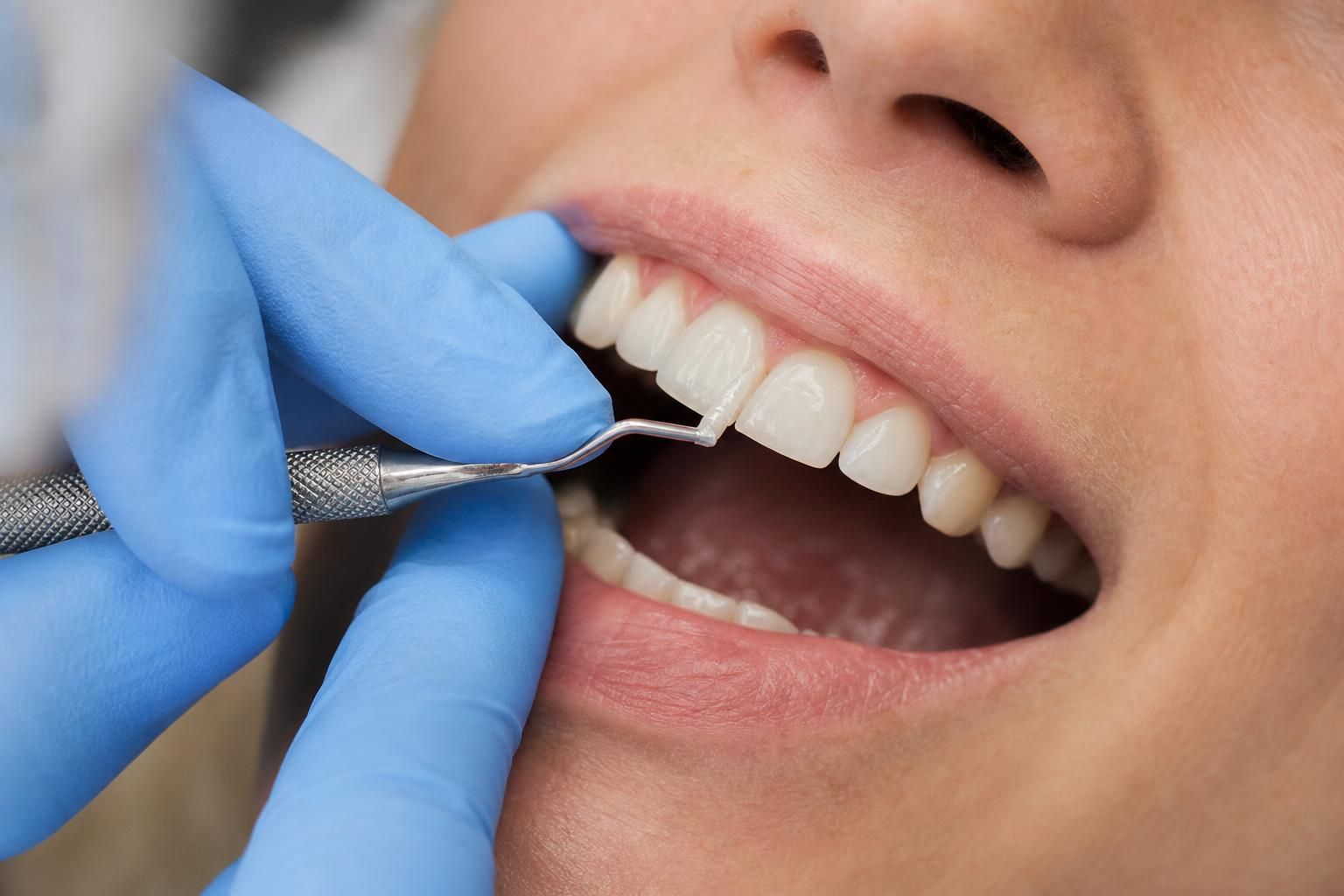
Dental bonding is a cosmetic dental repair that uses tooth-colored composite resin to change a tooth’s shape or color. The resin is placed directly on the enamel, shaped to blend with nearby teeth, hardened with a curing light, and polished. Bonding aims to look natural, not obvious. It works best for small, focused changes rather than a full smile makeover.
Common Dental Bonding Before and After Results
Dental bonding before and after results often show smoother edges, smaller gaps, repaired chips, and better color balance. A tooth that looked chipped, stained, short, or uneven can appear more natural after bonding. Common improvements include rebuilding a chipped front tooth, narrowing small gaps, covering stains that whitening cannot fix, and smoothing uneven edges. Before-and-after photos help set expectations, but your result depends on tooth shape, bite, enamel, and shade matching.
Chipped or Cracked Teeth
Bonding can repair many small chipped teeth by rebuilding the missing edge with composite resin. Cracks need more caution. A shallow surface crack may be treatable with bonding, but a deep crack may require another restoration.
Gaps, Stains, and Uneven Edges
Bonding can make small gaps between front teeth look narrower without moving the teeth. The dentist adds resin to one or both sides. This changes the visual space between them.
It can also cover some tooth stains or uneven front edges. If discoloration is deep or widespread, veneers may look more even.
Who is a Good Candidate for Dental Bonding?
A good candidate for dental bonding has healthy teeth and wants modest cosmetic changes. It works well for small chips, light wear, minor gaps, and isolated discoloration. Bonding is especially common on front teeth and usually preserves more natural tooth structure than veneers or crowns. It may not be ideal for heavy grinding, large fractures, weak teeth, decay, or bite problems. If you want a small, focused improvement rather than a full smile makeover, bonding may be enough.
What Happens Before, During, and After the Procedure?
Dental bonding usually takes one visit for a small cosmetic repair. Your dentist first checks your tooth, bite, enamel, old repairs, and smile goals. They then choose a composite shade that matches nearby teeth. The enamel is lightly prepared with etching, and the resin is placed in layers, shaped, and hardened with a curing light. Finally, the bonded area is trimmed and polished until it feels smooth and looks natural.
Before Your Appointment
Before your appointment, think about the exact change you want to see. Bring photos if they show your goal clearly. Just don't expect the same result as someone else.
You may need whitening before bonding if you plan to brighten your teeth. Resin doesn't whiten later like natural enamel. So shade timing matters.
Aftercare and Recovery
Recovery after bonding is usually easy, and most people return to normal activities right away. Avoid biting hard items like ice, pens, hard candy, or fingernails. To limit staining, rinse after coffee, tea, red wine, or dark sauces.
How Long Dental Bonding Results Last
Dental bonding can last for years, but it is not permanent. Results depend on your bite, oral care, habits, and daily wear. Composite resin can chip, stain, or wear down over time, and front teeth are especially noticeable. To help bonding last, brush gently, floss daily, keep regular dental visits, and ask about a night guard if you grind your teeth. Signs of trouble include rough edges, chips, staining, bite changes, or gaps near the resin. Costs vary by case and dentist.
Dental Bonding vs Veneers and Crowns
Dental bonding is best for smaller cosmetic fixes, while veneers and crowns handle bigger changes or stronger coverage. Each option has a different balance of appearance, durability, cost, and tooth preparation.
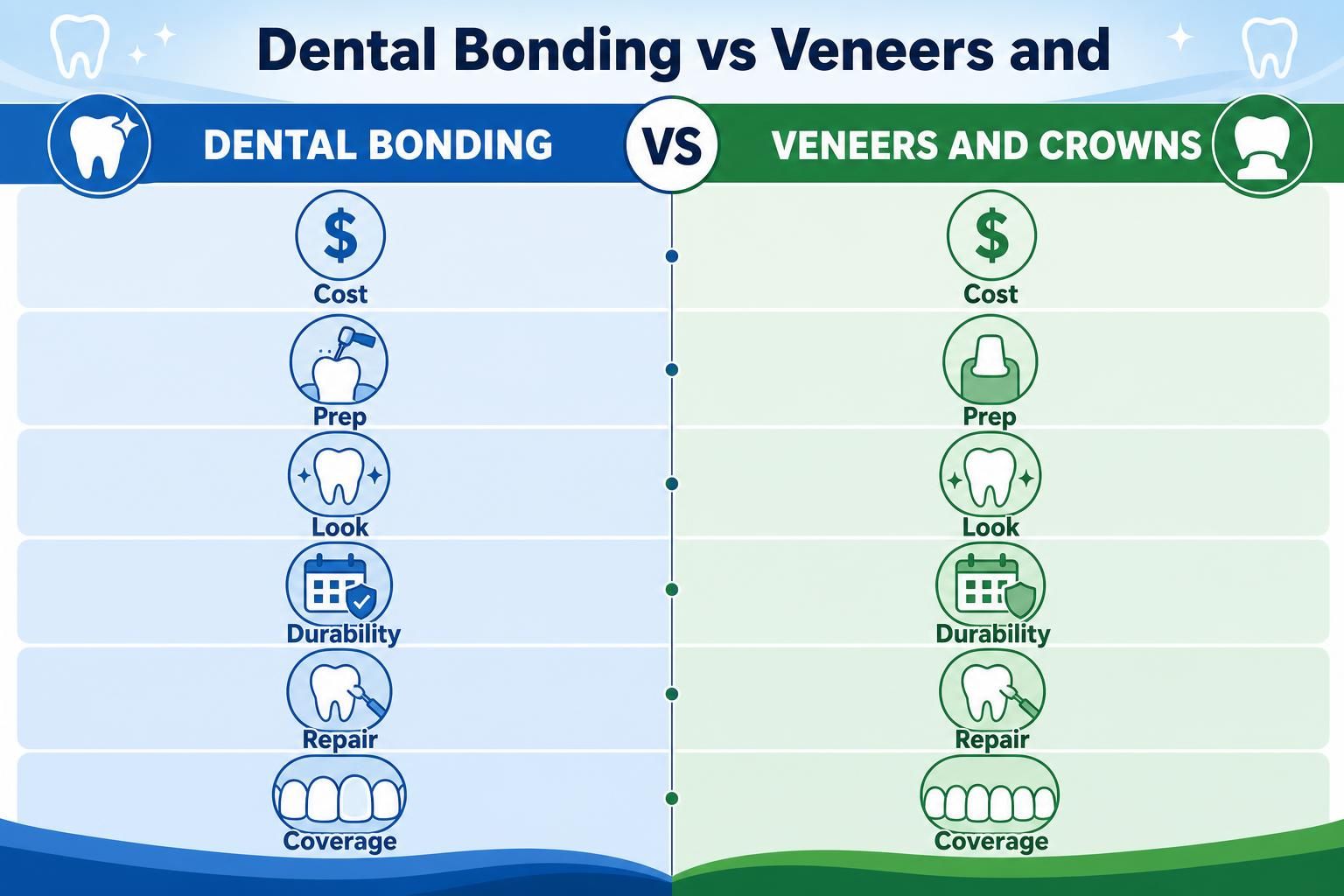
Bonding can be a smart first step if you want modest changes. Veneers may suit a wider cosmetic smile makeover, especially when several front teeth need matching color and shape. Crowns are usually for teeth that need more strength or protection.
| Treatment | Best use | Tooth preparation | Main tradeoff |
|---|---|---|---|
| Dental bonding | Small chips, gaps, stains | Minimal in many cases | Can stain or chip over time |
| Veneers | Broader cosmetic changes | More enamel changes | Less easy to reverse |
| Crowns | Weak or damaged teeth | More tooth reshaping | Covers most of the tooth |
Let's say a patient wants four front teeth to look whiter, longer, and more even. Bonding might help if changes are small. But veneers may give a more even result across all four teeth.
The pros of bonding are clear. It's conservative, usually quick, and often costs less than veneers or crowns. The limits matter too. It may not last as long, and color can change with staining.
FAQs About Dental Bonding Before and After
Dental bonding before-and-after questions usually focus on appearance, comfort, timing, and long-term care. That's fair, because small cosmetic changes can feel like a big decision.
The best answers come from an exam, not photos alone. Your dentist can check your bite, enamel, tooth color, and repair size. That helps you avoid a result that looks good at first but doesn't hold up.
Does Dental Bonding Hurt?
Dental bonding usually doesn't hurt because the work is mostly on the tooth surface. Many small bonding repairs don't need numbing. If decay, deeper damage, or sensitivity is involved, your dentist may numb the area to keep you comfortable.
Can Dental Bonding Close Gaps Between Front Teeth?
Dental bonding can close or narrow small gaps between front teeth. The dentist adds resin to the sides of the teeth to reduce the visible space. Larger gaps may need orthodontic treatment for a better bite and more stable result.
Can Dental Bonding Stain Over Time?
Yes, dental bonding can stain over time because composite resin absorbs color more than porcelain. Coffee, tea, red wine, smoking, and dark sauces can affect the shade. Good brushing, dental cleanings, and careful food habits can help.
How Much Does Dental Bonding Cost?
Dental bonding cost varies by tooth, repair size, location, and provider. A small chip may cost less than treating several front teeth. Ask your dentist about current pricing and whether future maintenance or replacement may be needed. Bonding is often a good option for small visible fixes, but a consultation is the best way to learn what is realistic for your smile.